We meet a token the day it’s born.
Every other screener meets it the day it lists. StealthX reads every BSC block itself — so it sees the rug template, the bonding curve, and who really filled it, before anyone else has a chart to look at.

A screener that only reads other people’s data can only meet a token at the finish line.
When a bonding curve fills and a token lands on PancakeSwap, everyone sees the same fresh chart starting at zero. Two tokens can arrive looking identical — one filled by six wallets in ninety seconds, the other by three hundred over a day. The DEX can never tell them apart. We watched both happen, so we can.
Fingerprint the contract, not the name
We hash every launch's bytecode. Two wallets shipping the same rug contract under different names look like one shell to us — and if its past pools are already empty, that's a verdict, not a hunch.
See it before any DEX does
Most BSC memecoins start on a four.meme bonding curve, invisible to every DEX-based screener until they graduate. We read the curve directly, so we know a token — and who's buying it — from its first block.
We don't guess if you can sell. We try.
Every honeypot and exit check is a real swap simulated against live reserves on our own node. When our result disagrees with a third-party checker, ours wins — we've caught both false alarms and missed traps.
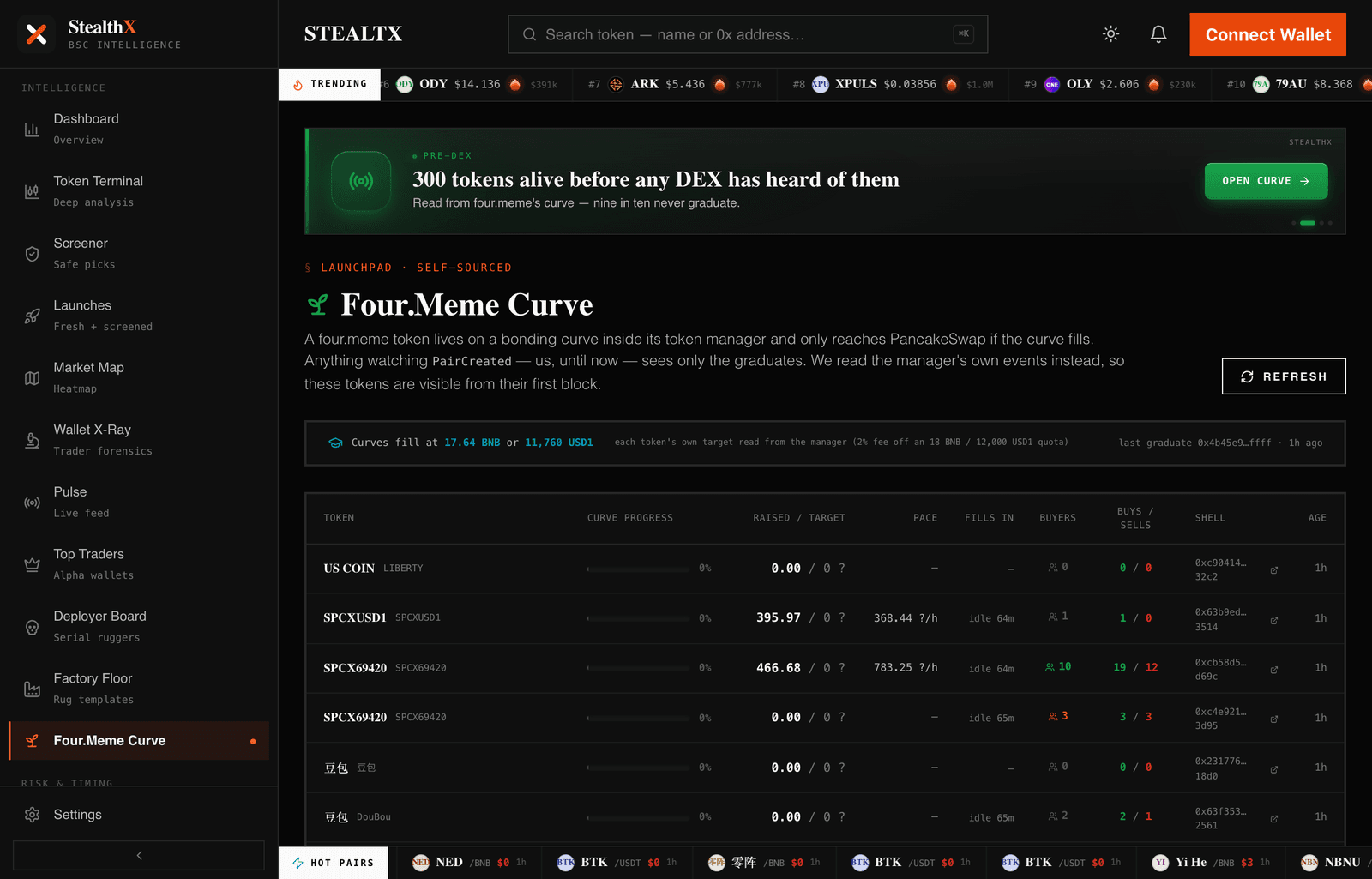
The launchpad, live
Every token on four.meme's curve, priced against its own target, with distinct buyers and its shell class — while every other screener still shows a 404.
How the curve works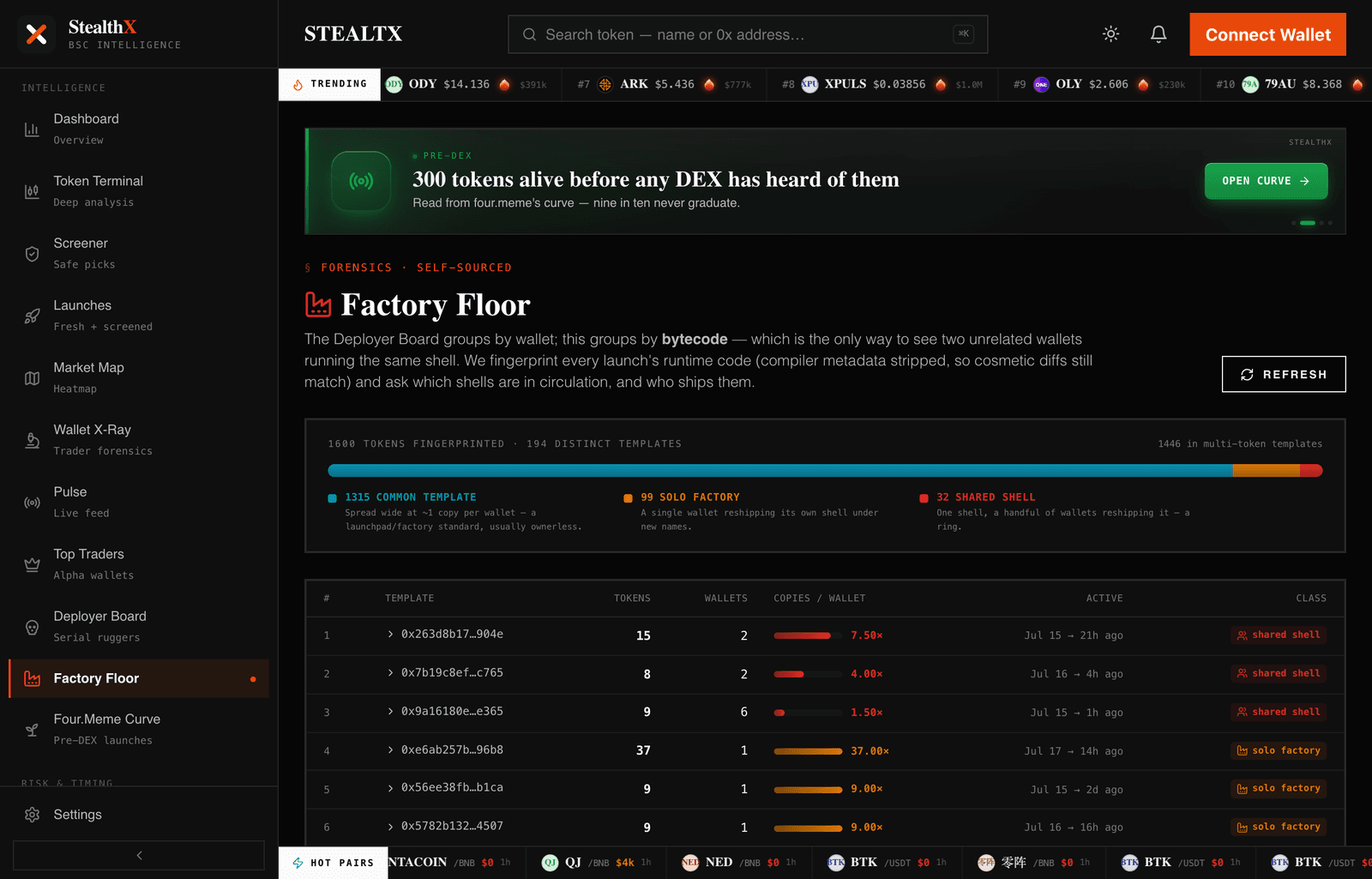
The rug factory floor
Shells ranked by concentration, not popularity. A contract reshipped 37 times by one wallet is a production line; a launchpad standard shared by hundreds is not. We tell them apart.
How fingerprinting works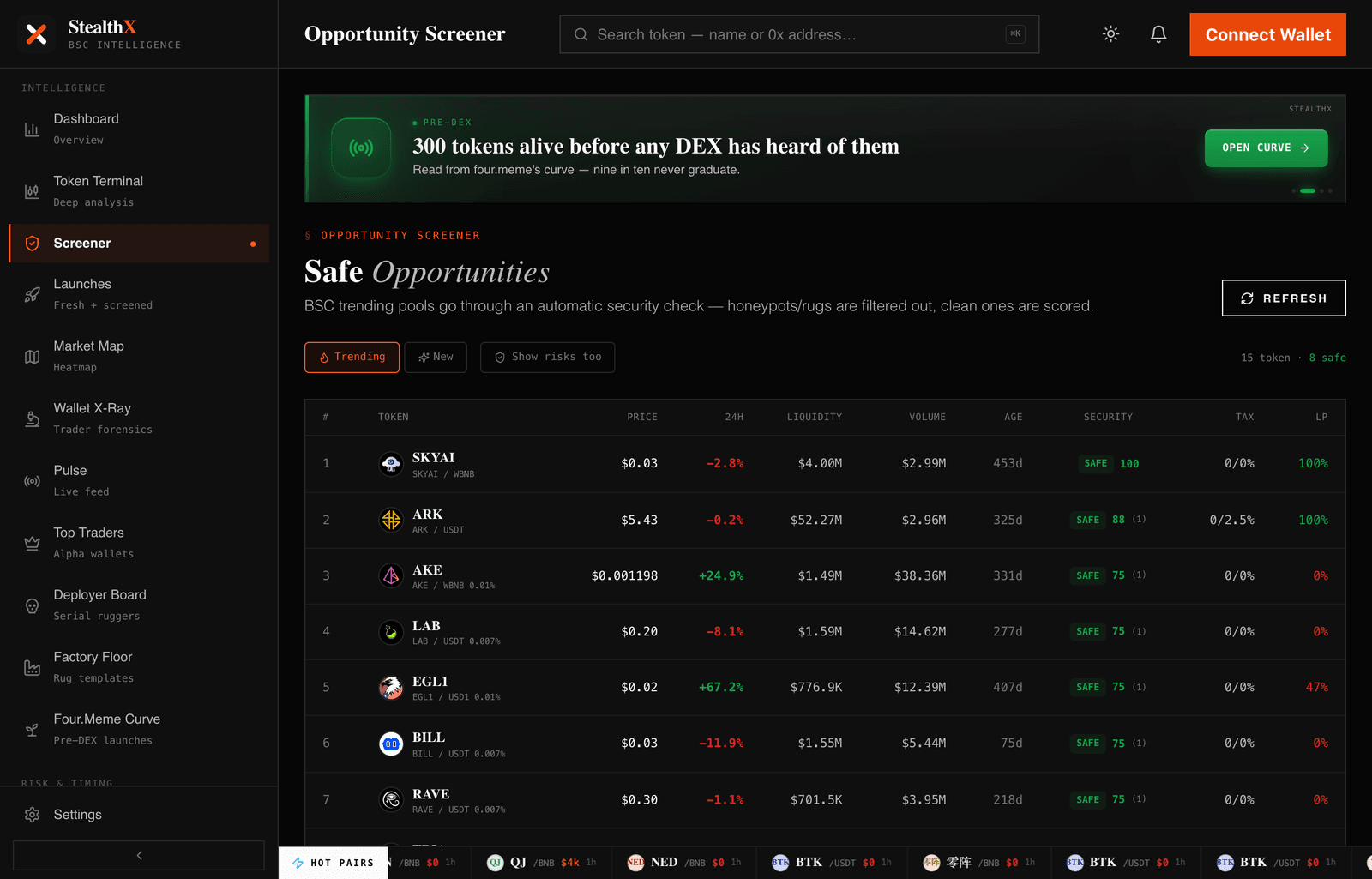
A screener with a memory
Trending pools that pass a per-token safety check — and then a second veto: if the shell has been drained before, no clean contract scan saves it.
How the veto works“A tool that hides its blind spots is worse than one that has them.”
We only know what we’ve indexed. The first copy of a new rug template looks innocent to us, because to us it is. None of this is advice or a guarantee — it’s evidence. The manual spells out exactly where the evidence runs out.
Read what we don’t knowOpen the terminal. Paste an address.
Nine reads on any BSC token — even the dead, rugged, and pre-DEX ones every other screener can’t show you.